
Managing any chronic illness is a lot. The emotional toll it takes can deplete your energy quickly and all the more if you’re also experiencing chronic fatigue syndrome which seems to accompany autoimmune conditions.
Coupled with managing symptoms, appointments, medications, work, family, and the emotional weight of chronic illness, completely overhauling your diet can feel like one more impossible assignment.
Starting simple can make it feel manageable rather than impossible.
When Food Became Personal for Me
There was a turning point in my own autoimmune journey when I realized something important. My medical team was/is an essential part of my care, but they couldn’t make my everyday choices for me.
I needed to participate in caring for my health. To me, that meant doing whatever I could do (within my power) to help myself.
One of the first places I decided to begin was nutrition. I wasn’t sure what that should look like, but I made a simple decision to begin adding more fresh food which translated to less processed food.
Sometimes we become so focused on everything we think we need to remove that healthy eating begins to feel like deprivation. Instead, try asking:
What can I add to this meal that will nourish me?
That question feels different, doesn’t it?
What Does Anti-Inflammatory Eating Actually Look Like?
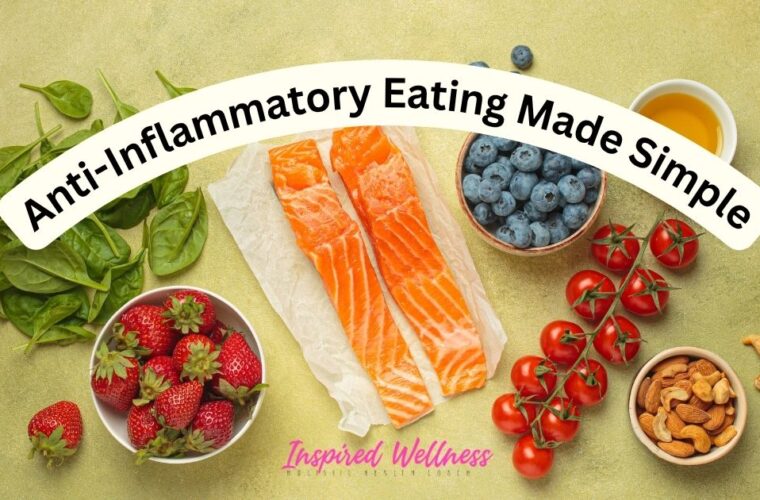
There isn’t one magical “anti-inflammatory diet.” In general, an anti-inflammatory eating pattern emphasizes minimally processed, nutrient-dense foods such as:
- Colorful vegetables and fruits
- Healthy fats, including olive oil, nuts, seeds, and avocado
- Quality protein sources
- Fiber-rich whole foods as individually tolerated
- Herbs and spices
- Fewer highly processed foods and foods high in added sugars
Think less about creating the perfect plate and more about gradually shifting the balance of what you eat.
For someone living with autoimmune disease, individual food tolerance can vary. Your medical provider or registered dietitian can help you navigate specific dietary needs, allergies, deficiencies, medications, etc.
Lifestyle medicine should work alongside appropriate medical care—not replace it.
Make Your Plate Simple
Here’s an easy approach: Start with three questions:
Where’s my protein?
Protein helps provide the building blocks your body needs and supports muscle, especially as we move through midlife.
Where’s my color?
Add vegetables or fruit. Different colors generally represent different nutrients and beneficial plant compounds.
Where’s my healthy fat?
Consider olive oil, avocado, nuts, seeds, or another whole-food fat that works well for you.
That’s it.
You don’t need seventeen ingredients or a recipe worthy of Instagram.
Grilled chicken, roasted vegetables, and avocado counts.
Eggs with sautéed vegetables and berries count.
Leftover protein tossed over greens with vegetables and olive oil counts.
Simple food is still nourishing food.
Nourishment, Not Perfection
This may be the most important part.
One meal will not determine your health.
Neither will one birthday dinner, vacation, difficult week, or imperfect choice.
What matters more is the pattern you create over time.
I believe caring for our bodies is part of stewarding what God has entrusted to us. That doesn’t require obsession. In fact, I believe grace belongs at the table too.
Your food choices don’t determine your worth.
They are simply one of the tools available to help you care for yourself.
So rather than asking, “Can I do this perfectly?”
Try asking:
“What’s one way I can nourish myself better today?”
Maybe you add vegetables to dinner.
Maybe you replace one highly processed snack with a whole food. I recommend protein.
Maybe you prepare protein ahead of time, so tomorrow’s lunch is easier.
Small choices count. And repeated small choices eventually become a lifestyle.
This week don’t overhaul your entire diet.
Choose one meal you eat regularly and make it a little more nourishing.
Because anti-inflammatory eating doesn’t have to be complicated.
It starts with something wonderfully simple:
Nourishment, not perfection.