
When you’re living with an autoimmune condition, it doesn’t take long before someone tells you what you should—or shouldn’t—eat.
One person suggests to eliminate an entire food group. Another recommends an expensive supplement. Another person recommends a Paleo diet while yet another suggests a Keto diet. What are those you may wonder. Before long, nutrition begins to feel overwhelming instead of nourishing.
Conflicting advice can be discouraging and since you don’t have any idea where to even begin, you don’t do anything. Sound familiar?
Inflammation is your body’s natural response to injury or illness, but when it becomes chronic, it can contribute to many health concerns, including autoimmune conditions. Healthy eating can help support your body’s normal inflammatory response and overall wellness.
The good news is that supporting your health doesn’t have to begin with a complete kitchen makeover or a perfect meal plan. Small, consistent habits can make a meaningful difference over time. While nutrition isn’t touted as a cure for autoimmune disease, it is one of the most important lifestyle choices we have to support overall health and work alongside the care we receive from our healthcare providers.
Here are three simple nutrition habits that can help calm inflammation and support your wellness journey.
1. Fill Your Plate with More Whole Foods
One of the simplest places to begin is by adding more foods that come from nature.
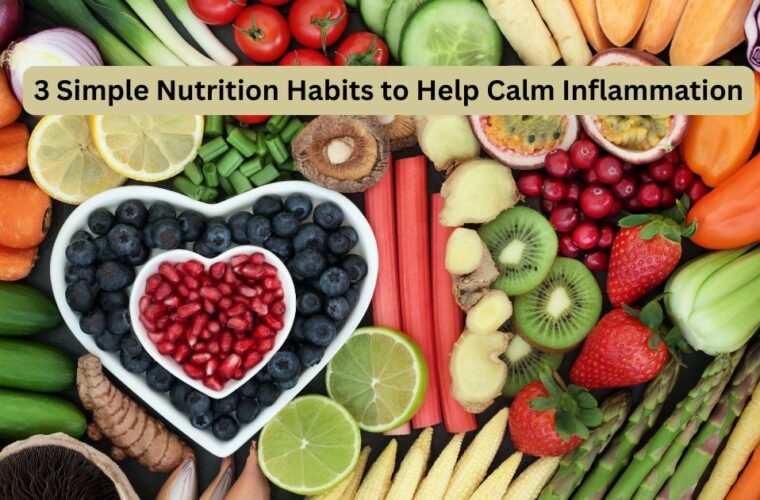
Fresh vegetables, colorful fruits, beans, nuts, seeds, lean proteins, and healthy fats provide nutrients that help nourish your body and support normal immune function. They also naturally replace many highly processed foods that often contain excess sugar, sodium, and unhealthy fats.
You don’t have to change everything overnight.
Instead of focusing on what you need to eliminate, begin by asking yourself:
“What healthy food can I add to this meal?”
Small additions often lead to lasting habits.
2. Eat the Rainbow
Have you ever noticed how beautiful a colorful plate looks?
Those vibrant colors aren’t just appealing—they represent a variety of vitamins, minerals, antioxidants, and plant compounds that help support your body’s natural defenses.
Try adding different colors throughout your day:
- Dark leafy greens
- Bright berries
- Orange sweet potatoes
- Red peppers
- Purple cabbage
You don’t have to eat every color at every meal. Simply aim to make your plate a little more colorful over time.
Your body will thank you for the variety.
3. Choose Progress Over Perfection
This may be the most important habit of all.
Many women carry unnecessary guilt around food. They believe one unhealthy meal means they’ve failed or that they have to eat perfectly to feel better.
That’s simply not true.
Healthy eating isn’t about perfection. It’s about consistency.
One balanced meal won’t transform your health overnight, just as one indulgent meal won’t undo all of your progress.
Give yourself grace. Enjoy celebrations. Learn from setbacks without letting them define you.
Sustainable habits are built one choice at a time.
A Faith Perspective
I believe our bodies are a gift from God, and caring for them is one way we honor Him. But honoring our bodies isn’t about striving for perfection – it’s about faithfully caring for what He has entrusted to us.
1 Corinthians 6:19-20 – “Don’t you realize that your body is the temple of the Holy Spirit, who lives in you and was given to you by God? You do not belong to yourself, for God bought you with a high price. So you must honor God with your body.”
Each healthy choice becomes an act of stewardship of our body, not a measure of our worth.
God’s grace is present at every meal, on both the easy days and the difficult ones.
One Simple Action Step
This week, choose one nutrition habit to focus on.
Maybe you’ll add one extra serving of vegetables each day.
Maybe you’ll try a new colorful fruit.
Or maybe you’ll replace self-criticism with grace when your meals don’t go exactly as planned.
Remember, lasting change begins with one small step.
As we begin our Nutrition pillar, I hope you’ll let go of the pressure to do everything perfectly. Instead, embrace simple habits that nourish your body, support your health, and fit into your everyday life.
Healing is rarely about dramatic changes.
More often, it’s built through small, faithful choices repeated over time.
And every healthy choice is one more step toward caring well for the body God has given you.
In love and health,
Terri